An overview of vision
The eyes are small but remarkably complex organs that form the foundation of the visual system, giving us the ability to see and interpret the world. Despite their size, they are among the body’s most important organs, converting light into signals that the brain can process into images.
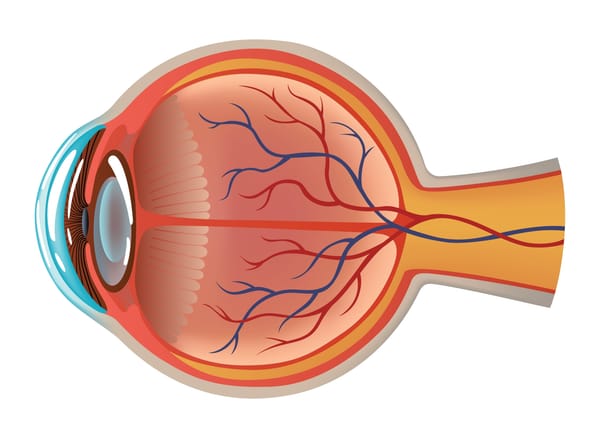
Vision begins when light enters the eye through the cornea, a clear, curved layer of tissue that bends (or refracts) light to help focus it. From there, light passes through the lens, which fine-tunes the focus and directs light onto the retina, located at the back of the eye. The retina is lined with specialized photoreceptor cells (rods and cones) that detect and convert light into electrical signals.
There are about 120 million rods, which are highly sensitive to light and allow us to see in dim conditions, though only in shades of gray. In contrast, there are about 6 million cones, which detect color and fine detail, making them essential for daylight and high-resolution vision.
Once light is transformed into electrical impulses, these signals travel through the optic nerve to the brain’s visual processing center. There, the brain interprets depth, color, shape, and form, creating the images we perceive.
Sometimes, however, the eye’s focusing mechanism is imperfect. Nearsightedness (myopia) occurs when the lens bends light too strongly, causing it to focus in front of the retina. This makes nearby objects appear clear but distant ones blurry. Conversely, farsightedness (hyperopia) happens when light focuses behind the retina, leading to clear distance vision but blurred near vision. Both conditions can be corrected with glasses or contact lenses, which adjust the path of incoming light.
The Boom Health app allows users to book registered nurses, personal support workers, and personal care services, schedule transportation, order prepared meals, rent or purchase medical equipment, and get emergency assistance. Download the app from the App Store or Google Play Store.
This article is not intended to be a substitute for professional medical advice or diagnosis. Always seek the advice of your physician or another qualified health provider with any questions you may have regarding a medical condition.